Monday, January 25, 2016

Elevator Action/ Erebētā Akushon (エレベーターアクション) - SG-1000

Donkey Kong was a major smash hit in video game history and it helped put Nintendo on the international entertainment industry map. It features a proto-Italian plumber dodging barrels and climbing up a single-screen tower of ladders and girders to defeat the giant gorilla Donkey Kong and rescue Pauline.

Donkey Kong
In the years following, a fairly large number of "clones" appeared in arcades and on home systems and computers, trying to capture whatever it was that made Donkey Kong such a money making hit: Hard Hat Mack, Jumpman, Popeye, Ponpoko, BurgerTime and so on. None were exact clones, they all tried various gimmicks and reformulations, and many of them became classics in their own right, but none of them strayed too far from the single screen vertical up-and-down action -- in this Elevator Action isn't too different (except this time with scrolling).

Elevator Action takes a start-at-the-top-and-climb-down-to-win approach. You take on the role of a secret agent, secretly gaining access through a secure building's elevator shaft. As you work your way down the building via elevator, counter agents try to stop you from stealing secrets conveniently located behind clearly marked red doors. At the bottom of the building you hop in a getaway car and move on to the next level where the challenge gets cranked up a notch, repeat until you run out of lives.


The arcade Elevator Action isn't exactly a flashy game, even by 1983's standards, but it's competent. Ports were released for every system under the sun, but the Sega SG-1000 version interests me the most because of how spare the system resources were at the time. (Note: there was an Atari 2600 port under development, but it was never finished and the leaked game is not quite complete enough to be called a complete game).

Not even as powerful as a ColecoVision (and almost compatible with it), the SG-1000 was Sega's first entry into the home console market and came out a year after Coleco released their console and the same year Nintendo released their gaming colossus, the Famicom -- the SG-1000 never really stood a chance in the market. However, Sega kept trying, releasing a home computer version (that may have informed the legendary MSX standard), an SG-1000 II, then the Mark III, then the Master System and finally achieving global success with the Mega Drive/Genesis. Every one of those systems traces lineage back to the SG-1000.

So it's interesting to see what developers did, faced with the challenge of porting a complex arcade game to hardware so limited it couldn't even display two colors on a given sprite and could only show 16 colors at a time.

One of the things that set Elevator Action apart from other Donkey Kong clones was that Agent 17 ("Otto") is a surprisingly expressive character to control. He has lots of game verbs for a 1983 video game avatar. He can shoot his pistol, jump kick, control elevators, ride on top of them, shoot out lamps (rendering the game dark for a time), ride escalators, jump across elevator shafts, duck under enemy fire, enter red doors and probably a couple more things I can't remember. I'm hard pressed to think of another video game character that can do so many things until Super Mario Bros. redefined how characters should control 2 years later.

Elevator Action is also a violent game. You literally clear a skyscraper by going floor to floor and shooting everybody you see, regardless of any hostile behavior on their part. If you aren't shooting them in the face, you're kneeling and shooting them in the legs or crotch, dropping light fixtures on them, jump-kicking them or in rare circumstances crushing them with the elevators themselves -- turning conveyance into deadly weapon. Philosophically it may be that you are actually the bad guy in this game.

Elevator Action on the SG-1000
Distillation is the process of heating a liquid composed of several components in order to separate them. It's used in the production of petroleum products from crude oil and the production of hard liquor. And this is what the SG-1000 port of Elevator Action is, the distilled hard liquor of the original. It keeps just enough of the game there that you know you are playing the same game, while tossing everything else that's wasn't necessary. It's a remarkable piece of design editing. The graphics are just this side of representational, the signature theme song is intact, your jump arc is correct, even the height of your duck position is correct -- something that not every port got correct.

When compared to other ports on other limited systems, like the ZX Spectrum, it really shines. The Speccy port is a complete redesign of the game and it suffers from this, elevators move too fast, the character's signature duck (allowing enemy bullets to zip right over the classic hair style) is turned into a dive, the bullets move wrong, escalators are weird two part affair and so on. Everything important is here in the SG-1000 version.


There's only a couple places where maybe a little too much was edited out. The first is that your enemies are far more aggressive than the original (or other home ports), often firing the moment you can be hit. This amps up the difficulty so it feels more like the second or third level of the original. There's also a weird bug that sometimes prevents Otto from getting onto available elevators, sometimes putting you into poor tactical positions.


Still, these are minor issues with an otherwise great port of the arcade original. Despite being (or maybe because) such a violent game, I find it strangely soothing to play after a frustrating day at work. You jump in, shoot guys in the face or crush them under elevators, steal secrets and make your getaway. It seems really simple on the surface, but there's a strange depth to the gameplay that keeps it fresher and more interesting than you would think. The SG-1000 port distills this down to perfection and I find myself returning to this version of the game more than any other port -- even later easier versions with more gameplay options.

Sunday, January 24, 2016

Berzerk - Atari VCS/2600


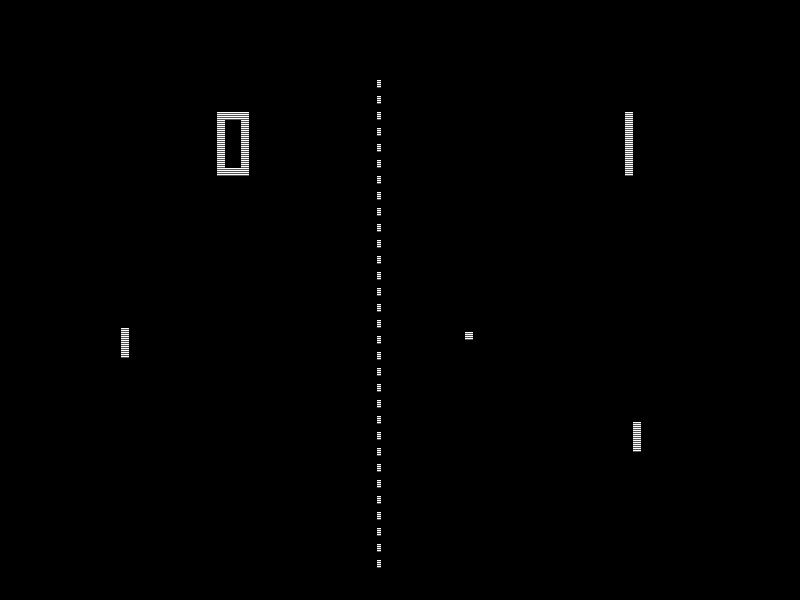
When Nolan Bushnell and Ted Dabney built their first arcade game, Computer Space, (released just a couple months after similar game Galaxy Game) one of the major bits of feedback they received was that it was simply too complex of a game for people to walk up and play, prompting them to refocus on making simpler games, Al Alcorn's Pong being the first result from this change in philosophy and a major hit.

Computer Space
What sometimes gets lost in this history is the shared lineage of these games in the minicomputer revolution of the 60's. It's inevitable as minds get to know the rules of any system to want to start to explore the boundaries of that system and this turns rapidly into play. In computing, bored academic researchers figured out how to hook a display up to a PDP-1 and quickly started making games -- one of the first was Spacewar. 

Space War
Bushnell and Dabney's genius was not in inventing a space shooter, they didn't, but in figuring out how to replicate the basics of the game cheap enough to make it have a commercial chance. Galaxy Game, in comparison, used the same expensive minicomputer hardware found in the academic research setting, ensuring the games could never pay for themselves and thus not be commercial viable. 
Tennis for Two
Bushnell and Alcorn's later Pong repeated this pattern by adopting William Higinbotham's 1958 Tennis for Two to fit into cheap, commercial deployable hardware. Combined with the lessons learned about complex controls from Computer Space, turned Pong into a tremendously successful and highly influential game, launching Atari into the stratosphere and kickstarting the entire commercial video game industry.

Pong
It didn't take long for this new industry to see a pattern: look at the world of academic research computing, boil the game down to basics, implement in cheap hardware and enjoy buckets full of quarters. 

It turns out that academic computing was full of these little experimental games. On early Unix systems a game simply called Robots was a minor side project by programmer Ken Arnold (better known as the creator of Rogue which spawned its own entire genre of games that still exists to this day).

BSD Robots

Robots has its own complicated history full of clones and copies. But one thing that defines it as a game is the turn-based strategy nature of the gameplay. The player can sit and deliberate over their next move as long as they wish, while enemy mines/robots slowly vector in towards the player. The game is frightfully hard, and also nearly ubiquitous on early Unix-like systems.

And so it turns out that Alan McNeil, an employee of Chicago based Stern Electronics, almost definitely had contact with the game at some point. When Stern decided to enter the new arcade video game market, in addition to its earlier pinball games, they put McNeil in charge of designing and building a game. 

Alan McNeil
McNeil, crediting a bad dream he had about being chased around by robots, made liberal use of Robots basic design. However he turned the game on its head. Robots is at its heart a defensive game, you move about the game screen trying to cause enemy robots to collide with themselves or obstacles scattered around the screen. McNeil, correctly sensing that this wouldn't appeal to the kind of walk-up game play needed for arcade games, armed the player with a weapon. He then expanded the obstacles into a cursory maze, got rid of some of the extra player verbs (that would have required extra buttons and controls), added some speech and finally made the game real-time instead of turn-based.

These changes, as it turns out, where just what the arcade scene needed and Bezerk was born. It hit the arcades at the end of 1980 and was an immediate hit. It's not hard to see why.


Bezerk makes the player feel like the most dangerous thing in the room. The robots are trapped in the maze with you, not the other way around. You can maneuver better than they do, fire faster and use strategies to clear the room. The robots are powerful only in numbers, but they're fairly dumb -- a valid strategy is often to trick them into walking into maze walls (which will kill you also). If you take too long, a bouncing smiley face called Evil Otto will come out and "encourage" you to move on. This keeps the game active and leaves the player with precious little time between waves of robots.

Other strategies might involve shooting enemy fire right out of the air, taking cover behind maze walls causing Otto to collide with enemy robots. In a nod back to Robots, the enemy robots will die if they collide with each other. Virtuoso players play the game aggressively and trade laser fire readily with their enemies. 

Despite the lower resolution, Bezerk survives the transition to the VCS/2600 surprisingly well. This is the version I remember the best, and the sounds of the player dying still send a chill up the back of my neck. The robots can often be brutal, pumping the players electrified body full of laser shot well after death.

Bezerk for the 2600 wasn't released till 1982, a couple years after the arcade release, but the distillation of the controls down to a single button maps well to the 2600's controller. The lower resolution adds a little bit of claustrophobia to the game, though occasionally can make it feel a little cramped. It also loses the voices and diagonal shot take off at a weirdly horizontal bias making learning their angle key to success.

But these are very mild complaints, the game is fantastic, even today. It's still played competitively. The modern retro gaming movement has breathed some new life into it. Bezerk has a long legacy: Robotron 2084, Smash TV, Geometry Wars, Dead Nation, and so on. And modern gamers raised on these progeny are finding new appeal in the purity of the game design. Berzerk is not just a great game for the 2600, it's a great game today and feels surprisingly modern. It was followed by a lesser known, but no less great, sequel called Frenzy, which features several upgrades to the sparse play mechanics of Berzerk.

Saturday, January 23, 2016

Granada (グラナダ) - MegaDrive/Genesis


When I first fired up Granada, I was expecting some kind of overhead shooter in the style of Ikari Warriors, but with one of those cleverly misspelled Japanese titles evoking Regan-era military interventions. I really had no idea what to expect, and the opening scroller's telling of the story isn't all that helpful either. However, the opening theme music was rocking -- a "theme" that would carry through the rest of the game.

It turns out, Granada is not this kind of game.
The next thing I thought was that it was a re-imagining of 1988's arcade sleeper hit "Assault". Assault is one of those games that shouldn't have been able to exist in the late 80's, it made extensive use of full-screen scaling and rotation and had an almost impossibly refined, tactical gameplay style that rewarded careful planning and use of cover that wouldn't really be seen for another few years. It was right on the cusp of what was commercially possible and was sadly ignored by gamers.


However, the Genesis, which came out the same year, was entirely incapable of providing even a watered down experience of Assault. It possessed no hardware scaling and rotation help of any kind, and the extensive use of digitized audio was also just right out of reach of the system as well. Assault's complex twin stick tank controls were also unlikely to be cleanly replicated on the Genesis' button sparse controller. If anything Assault would have been more likely to become a SNES game except Namco and Nintendo had a famously caustic relationship during this time period, prompting Namco to principally work on the Genesis -- combined with the low sales for Assault, meant a home port of Assault wasn't seen until the Playstation years, and even then only as part of a games bundle.

Whether Granada was influenced by Assault is something only the developers know. There had certainly been previous games in the general style, but Assault feels like a turning point. The tank was nimble, the music was rocking and the levels were huge. Wolf Team built Granada in the post-Assault world and it has that same sort of epic feeling to it.

Granada was originally released on the unstoppable Sharp X68000 and looked and felt every bit a late 80s, early 90s arcade title should. Except it never made it to the arcade. Instead it has the same sort of thoughtful tactical gameplay that Assault has, and a little bit of the methodical game style home computer games tend to have. Instead of trying to wow the player with huge sprites, Wolf Team focused the game around a tiny player tank with a 500 ft. overview of the immediate area around the tank. This viewpoint, combined with a 10,000 ft. objective radar in the lower corner allows the player to plan attacks and take out enemies with more deliberation than Ikari Warriors.

Graphically, the X68000 game wasn't terribly impressive, but a solid visual experience. The levels were carefully designed around the player tank and each level provides a different kind of power up to assist you -- from an A.I. controlled drone to a giant attack disc, the power ups combine with the levels to bring different levels of strategy to each area.


Granada on the Genesis is thus a port of the X68000 original. Done in the same year, it was likely helped by some shared architectures between the two systems. It's remarkably faithful to the original. The graphical fidelity is not quite as good, the colors are a little muted, but it's perfectly recognizable as Granada.

The music, however, survives the transition almost completely intact, and this is a great thing. The soundtrack for Granada is a percussive synth-rock masterpiece that artfully uses the Genesis sound hardware in fantastic ways. Composers Masaaki Uno and Motoi Sakuraba created a pulse pounding soundtrack that helps make up for many of the graphical shortcomings of the game.


It's a shame Granada is not better known as I was unable to find even a single cover of this fantastic soundtrack -- and it's dying for such a treatment.

Gameplaywise Granada is a little mixed. The basic controls are fine, if a little twitchy and slightly encumbered by the Genesis' controllers. However, some of the powerups can be hard to use. The AI drone, for example, generally follows you around, but will sometimes just take off and disappear, and it shoots whenever it feels like it. Sometimes, this is not so helpful. The levels, even with the strategic map, can take a while to learn, and can sometimes be a little frustrating to navigate around. Bosses are likewise mixed, they're either fantastically easy, or frustratingly hard to figure out. It took me several goes at the the level-2 boss before I figured out the trick to kill it, and then the fight lasted just a few seconds. It feels like maybe one more layer of polish and balance would have pushed Granada over the top.

The game is also relatively short once you figure it out, less than an hour to run through it.


Granada is one of those almost entirely unknown sleeper games that more people should definitely be aware of. It's definitely worth playing today and holds up well. It's a solid B+ experience that rewards getting familiar with.

Saturday, November 29, 2014

Came across this excellent history and overview of graphics. Definitely worth a watch.


Expressiveness in Games

It's difficult to talk about games in the abstract, in the sense of the ephemeral components that sum together with the concrete technology to produce video entertainment. Part of this is the relative newness of the medium, sometimes a game is great or terrible for reasons we don't yet have language to describe. These intrinsic qualities require a body of work to assess, so that patterns spring forth and we can start labeling those patterns.

Unlike how a Sommelier might call upon a rich descriptive lexicon to describe a wine, game reviewers have long struggled (and needed) to develop a vocabulary to describe a game to those who have not experienced it - to draw not just a visual picture with words, but an experiential image. A game might have "tight controls" or "loose controls" for example, with "tight" being perceptually better in most cases.

Since the beginning. most games have been built around the idea of controlling an on-screen character or avatar. Derived from board game pieces, the game designers attempt to put your avatar into a variety of situations, relying on your shared identity and your instincts for self-preservation to spur you into action. During gameplay, you might be controlling a better-than-you-are Mario, capable of jumping, hopping, ducking, sliding, smashing, bouncing, stomping and otherwise careening about the play field in a dynamic controlled chaos - often using verbed moves in combination. Or you might be in charge of Duke Togo, capable of a saunter, a single height jump, and shooting while standing -- and that's it.


Putting on digital Mario, inhabiting him, you feel empowered, like you can do anything. As the game presents new situations, you feel like you have a toolbox of responses you can use to deal with them. Two different players might even approach the same part of the game with completely different approaches.

Poor Duke, however, feels like walking around a city wearing a refrigerator box while trying to maintain balance on a pogo stick. You feel panic at almost every encounter because your options are so limited: jump in mad desperation or stand there and absorb bullets until one of your wild shots finds a bad guy.

Mario allows you to express yourself, Duke doesn't. The game forces you to inhabit a hopelessly outclassed character, while Mario can be virtuosically played in any number of ways. Mario is an expressive character - and it's this expressiveness that defines the entire series to this day.


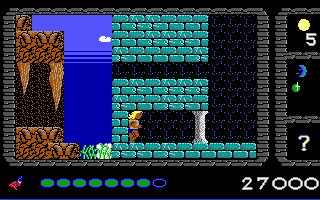
It's funny how often the presence of such an avatar can correlate with a game being considered good or bad. But it's not a perfect correlation. Simon Belmont in Castlevania was not very expressive. But it was the avatar's carefully considered limitations which helped fill the game with tension and balance the difficulty. Imagine if Simon could run, jump and smash like Mario from Super Mario Bros.! The game would be a cakewalk and the atmosphere would be ruined.

Later, when the Castelvania series was rebooted with Symphony of the Night, one of the most radical changes to the game was not the Metroid-style open world, but the expressiveness of Alucard as an avatar. It transformed the game-play and enabled a kind of fast-paced, aggressive play style that simply couldn't have existed in the 8-bit games. It made sense at the time, the son of Dracula, should be able to move so quickly, so fluidly, so much like you wanted him to play.


So it's important not to think of this term as being on the same axis as "good" and "bad", but just another dimension to consider when describing a game character and the play styles that character might be capable of.

Consider Leonardo in the Teenage Mutant Ninja Turtles arcade game. Not too terribly expressive: you can walk, jump, and strike from walking or jumping, but the rest of the game presentation more than makes up for any limitations of your character. TMNT is widely considered to be a great game.

Now consider Frank Castle in The Punisher Arcade Game. He can walk, run, slide kick, stand and fight, shoot, throw, jump and throw, jump kick, pick up weapons, shoot, toss grenades and more. He's a wildly expressive character, yet the game is not well known. Arguably the art direction, sound and overall game design of TMNT is better. But The Punisher is still a great game. (full disclosure, I like The Punisher game more).

Expressive character is a term I'd like to use from now on, and you can think of this post as a placeholder, a reference point to explain what it means. I invite other reviewers to refer to this concept when describing games, it gives us digital sommeliers a common reference point and expands our meaning.

Tuesday, October 28, 2014

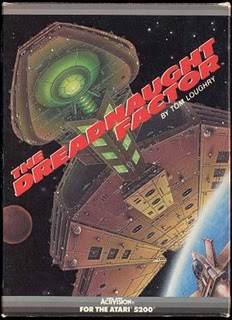
The Dreadnaught Factor - Atari 5200

The night before Christmas my cousins and I built a fortress of presents under our fake Christmas tree and lay under the plastic needles looking up at the whirl of blinking colored lights and tinsel. Protected by our formidable barrier of merriment, no adults dared come into the family room. Thus isolated, we were free to try and discern what gifts we would be getting that year. One huge box with my name on it had me transfixed all evening. The anticipation had grown so strong that our parents, unable to get us to bed, had allowed us each to open two presents.

The first was that box of mysteries, which turned out to be an Atari 5200. My second present (opened at my Grandmother's subtle hint) was The Dreadnaught Factor. This negotiated arrangement concluded, our parents finally got us into some kind of horizontal laying position, in sleeping bags under the tree in the remains of our assaulted holiday stronghold. Sleep escaped us and by two in the morning we had figured out how to hook the Atari up to the family television and we started to play until exhaustion and hunger wiped us out late the next evening.

Before the 5200 our combined video game playing experience consisted of time playing arcade games, my neighbor's Atari VCS/2600 and some home computer games on some of the various 8-bits of the time. Nothing we had experienced to that point prepared us for this game.

Star Wars still hung huge in the public consciousness, but the arcade had failed to provide an interactive experience as cinematic, as awesome as the movies (the arcade Star Wars hadn't yet been released). The closest experience by Christmas 1982 was probably Parker Bothers' Star Wars: The Empire Strikes Back (SW:TESB) for the Atari VCS/2600 which tried to replicate the Battle of Hoth.


SW:TESB blew my child-like mind when I first played it at a friend's house. The battle it recreates is one of the most iconic scenes in movie history. But the game ultimately disappointed me when I couldn't grapple and trip the legs of an AT-AT and the rest of the gameplay just turned into a competition of how many times I could hit the fire button while zooming left and right. There simply wasn't much there there, even young me caught onto that.

It's hard to trace back the history of the idea of a "Boss Rush" in video games, but SW:TESB might be close to the origins though the term hadn't been coined yet. You really only ever fight what we'd think of today as bosses, AT-ATs. 

In this Star Wars environment, The Dreadnaught Factor (TDF) took a different spin on the idea. Instead of a horizontal shooter,  TDF on the Atari 5200 is a vertical shmup (the port for the Intellivision is basically the same game in a horizontal format) built entirely around the boss rush.

Just like other contemporary vertical shmups, you pilot a lone fighter craft. Unlike all those shmups however, you never really fight other enemy fighters, you fight huge multi-screen spanning Star Wars Star Destroyer like "Dreadnaughts". 


In 1983 this was unbelievably innovative as a game, unbelievably derivative of Star Wars, and freaking awesome. It probably wasn't until Shadow of the Colossus on the PS2, 22 years later, that a similarly cinematic David and Goliath game set you up with odds so tilted against your favor. 

TDF does some things amazingly well, full-screen multi-directional scrolling (something the NES struggled with early on), tons of targets, a countdown clock that built up tension as the game progressed and more.

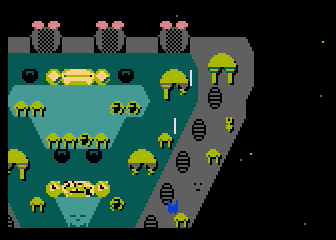
You strafe a giant dreadnaught, picking off cannons, missile launchers, engines and other targets -- and this is important, the damage you do to the dreadnaught is real. You take out the engines, it slows its descent towards Earth, you take out the bridge and it's limited in how it can coordinate defensive fire. These aren't just symbolic target points. You measurably impact and frustrate the enemy's ability to attack. The goal, borrowed again from Star Wars, is to plug up all the vents on the surface of the ship by bombing them, causing the ship's power system to overload and blow up.

In structure it's also a bit of a riff on the 1980's Missile Command. In Missile Command your view is on the entire battlefield and the contact between your defense missiles and the in-bound enemy ICBMs is abstract. In TDF, you are the missile in essence. The feeling of being overwhelmed and under attack is still there. Where Missile Command is a strategic game, TDF is purely tactical. You don't just send up a defense and pray to the fates for salvation. You are the direct instrument, the tip of the spear between the invaders and oblivion.


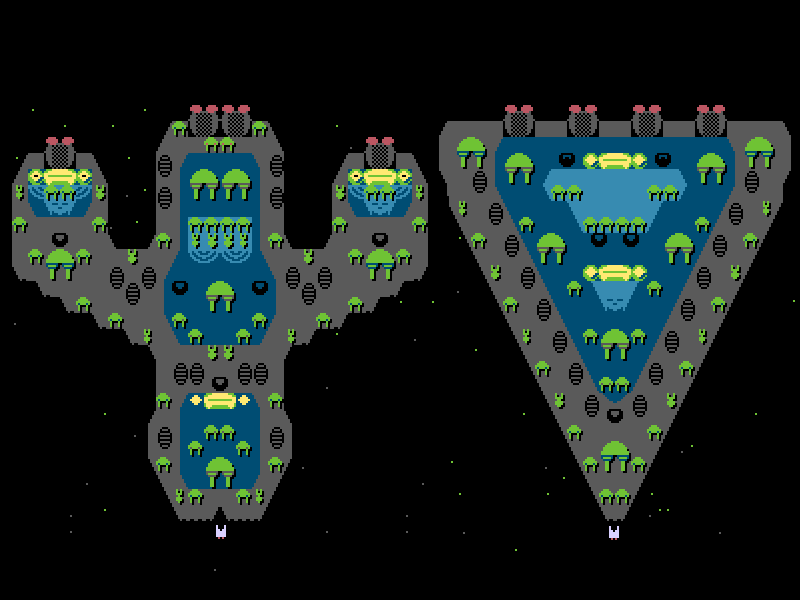
To cement the Star Wars influence, the first dreadnaught you encounter is about as close of a carbon copy to a Star Destroyer as could reasonably be rendered in 8 glorious bits. The triangular shape instantly recalls those unstoppable flexions of emperial power and cues you into what you're supposed to do, fight it! If the Rebels could do it, you can!


TDF runs with the idea and you start fighting ships of all kinds of layouts. And of course they get more and more aggressive as you go, guns fire more often and more accurately, missiles launch more quickly, etc. Before you launch each fighter, you get a proximity view that lets you know how close the dreadnaught of the level is to firing range to the Earth. The Earth rotates slowly down at the bottom of the screen in a surprisingly sophisticated graphical effect for the early 80's. As you move up the levels, the number of dreadnaughts you have to defeat to pass a level increases, eventually reaching huge armadas you need to beat.


Despite the screen filling cinematic experience, TDF is a strangely quiet game. There's no music, and just a handful of sound effects. The effects that are there are satisfyingly arcadey. I know the 5200 was limited audio-wise, but I still think it suffers a bit from this in presentation.

Control with the original 5200 controller is superb, when the 5200 controller works, it's actually a good stick for the era -- it's just too bad the build quality on the innards was so poor. The ship control is precise and you can move to where you need to make your approach. Under emulation it's also great, but there's something lost on a digital d-pad. If your emulator supports it, going at it with  an analog thumb stick is a close experience.

There's a surprising amount of tactical strategy here, do you go for the engines, but risk getting shot by the anti-aircraft fire? Or should you go directly for the vents, but risk the ship making it to the Earth? Maybe you decide to go for a suicide run, but risk running out of your limited supply of defense fighters. As the ships change shape and armament, your attack strategy can radically change.

If you come into this game from a modern context you might be a little disappointed. It's really just you and a handful of ships against this overwhelming enemy. There's no powerups (already old hat by this time courtesy of 1981's Galaga), but the gameplay feels so modern that you're going to assume there is. The enemy ships, while they also change in configuration and aggressiveness, don't get new weapons or goals. You basically see all of the enemy's tech tree and armament on your first strafing pass.

A modern game would have kept you and the dreadnaughts progressing in power until you were a virtual unstoppable death dealer and the dreadnaughts were unbeatable shards of pure might. But this is a classic game, and it's a miracle a game fit at all in the handful of kilobytes it was budgeted. However, in all the good ways that F-Zero is a pure racing game, TDF is a pure boss-rush shmup. It's almost like a more modern, casual indie game in this way.


TDF is kind of a forgotten gem. It wasn't an Arcade port, and the 5200 died a quick death. There's a port for Atari 8-bit computers that's basically the same as the 5200 (the 5200 was pretty much just a console-ized version of the computers), but the Atari 8-bit computers weren't nearly as popular as some of the other computers of the era. And there's the aforementioned Intellivision port which seems to be fairly well known inside of the Intellivision community, which is pretty much a horizontal remake of the game, but I've never really favored that take on the concept.
Still, for people that remember it, it seems to be almost universally loved. There are hacks of the game to give you more ships to fend off, and remakes. Modern reviews for it are strong. 


To me, TDF will always be the 5200 port first and foremost. It will always evoke that early morning, hooking up my new Atari to the TV, shushing each other and turning the TV down so we didn't wake anybody up. The mushy feel of the 5200 rubber buttons and the collar on the joystick, and the feeling of frustration at each loss and hitting the green "START" button over and over and over again.

Tuesday, August 12, 2014

Dark Ages - MS-DOS

When you're dealing with a platform as old as the PC you see lots of halting transitions. Text-to-monochrome graphics, monochrome graphics to 4-color CGA, 4-colors to 16 and so on. Unlike game platforms, the PC platform is in a constant state of flux. Lots of gradual in-generation upgrades punctuated by massive, but uneven jumps in capability -- all at vast expense compared to consoles.

Audio hardware was no exception to this. It's hard to imagine today where every computer has built in highly capable audio hardware, but there used to be a vibrant and highly competitive market for add-on audio cards for home computers. One of the very earliest of these add-on cards was produced by a Canadian company, Ad Lib, Inc makers of a YM3812 powered FM audio card.


Originally built into the hardware chasis, the PC Speaker was basically designed to produce single tone error code beeps when the video hardware had a problem. Considered more reliable than most of the other early PC hardware, the Speaker was initialized first and would give a coded number of beeps depending on which piece of primitive hardware was going to cost you a small fortune because it died.

Later programmers learned to change the tone and play simple beeps during productivity operation, or simple single voice songs. Even later programmers learned to make more complicated sound effects (and even play back very scratchy digitized audio). But the hardware was horribly crippled and this was recognized pretty early. You can get an example of what playing an early PC game was like here:


While the graphics capability had improved a bit by 1991. The audio hadn't really changed much. By the late 1980s, Roland had stepped in to sell it's MT-32 MIDI synth hardware for PCs. It sounded (and still does) sound amazing - a quantum leap in PC audio. But at somewhere between $500-1000, with limited audio support outside of Sierra On-Line, was simply not an option for most PC owners.


Enter Ad Lib, Inc. A small Quebec company started by a former music professor named Martin Prevel, Ad Lib produced a simple, relatively cheap add in card. It didn't sound even close to as high quality of the MT-32, but by 1988 PC users were dying for just about anything better than the beeps and boops they were used to. Being inexpensive, it found a lot of buyers relatively quickly, and in the commercial games market embraced it with quite a few "AdLib Compatible" games (with Sierra's 1988 Kings Quest IV being the first game to support it). However, the shareware and freeware market lagged considerably.


Founded the same year as Ad Lib, Inc., Apogee Software Ltd., was one of the first companies to make a serious commercial effort at the shareware model. They introduced a novel "Apogee" model for game publishing: give the first 1/3rd of the game away for free and sell the 2nd and final chapters of the game. Some of the biggest games in history came out of this model: Doom, Quake, Duke Nukem 3D. But before those games even had a line of code written, an entire library of great PC games were put out under this model by many talented game makers.


Todd Replogle was one of these game makers. He had designed a couple games that were published by Apogee -- each one making a significant graphical leap over the last. His first game, Caves of Thor, used glorified text characters to represent an adventure game (not too unlike today's Dwarf Fortress in appearance). His next jumped to 4-color CGA graphics. By 1991 he was working on his next great leap. Except this time it was to have two major leaps, 16-color graphics and Ad Lib music - a first in the shareware industry. The result was the Dark Ages trilogy.

While there had been plenty of 16-color games by 1991, there were still relatively few platformer games a la Super Mario Brothers. but one of those had been the wildly successful Commander Keen series, also published by Apogee and made by none other than John Carmack and John Romero of Doom and Quake fame. Apogee was ready for more. Carmack and Romero had taken Keen to be published by Softdisk so that left them without another major platformer. Replogle took on the task, along with Allen H. Blum III as artist and Keith Schuler as the composer. 

So is Dark Ages a worthy follow up to Commander Keen (CK)? No is the simple answer, but the real answer is more complicated than that. Dark Ages showed that small software houses could technically do all the fancy hardware stuff the big boys like Sierra were doing. However, the execution is fantastically uneven.

Gameplay-wise, it's obvious that the Replogle was going for a Shadow of the Beast (SotB) style game. It's not a Mario-like exploration fest. You run left-to-right and shoot some kind of projectile at the various enemies you come across. There's not many jump puzzles or really much else to the game. You basically do your best to emulate an unstoppable juggernaut until you reach the end of the game. It's not poorly done at all, it's a solid play, but it's a less expressive game than CK or SotB.


However, level design is surprisingly thoughtful, requiring a good understanding of how the character moves and really being built around the character and what he can and cannot do -- in much the same way Castlevania is built around Simon Belmont's movement abilities. There's woefully few enemy types. But the game uses them in clever combination to keep your progression relatively interesting and challenging.

The graphics are not great. Despite having a dedicated artist. Characters lack personality or design, are poorly animated and lack the kind of polish you'd expect from a platform game on any platform by 1991. And it's probably this that really put this game in the bin of forgotten games. After a long play, the graphics start to feel impossibly jerky and constrained. It's as if you're playing a color upgraded Tiger LCD game and not a proper video game. There's lots of level variety, and each area feels different enough. But it's not enough to overcome these issues.


Audio is a fascinating example of a transition point in technology. The music is great, better than most games' use of the AdLib synth. Keith Schuler really tried to give each area a different feel, but provide thematically coherent music to the theme of the game. It pumps along and masks lots of the issues with the graphics. I personally kept playing just because I was enjoying running along killing bad guys to this music. It surprisingly holds up well.

Sound effects though do not use the AdLib card.  I'm not sure why exactly, but it wasn't uncommon in the era. Perhaps programmer limitations, or development efficiency (since playing the game sans AdLib meant just not playing the music), it's still puzzling. While later games provided passable sound effects via the PC Speaker, in Dark Ages it's also slightly annoying. The main sound effect you hear as the near constant sound of your projectiles, playing the same few notes thousands upon thousands of times while you work your way through the game. And unlike whatever speakers you have plugged into your AdLib, the PC Speaker traditionally doesn't have any volume control. It's just on. Replogle of course, knew that the sound effects weren't great.
Peter Bridger: It's June 1991, Apogee have just released Duke Nukem (the original side scroller), the sound effects made by Scott Miller. Should he write some PC speaker sounds effects for DNF? 
Replogle: HAHAHA! Speaker sound effects are only appropriate with computers lacking digital sound capabilities, something uncommon in all but the oldest tabletop PCs and laptops. 
So where does this leave the Dark Ages trilogy? Should you ignore it or play it? I'm just on this side of playing it. I think it's a more important game than it gets credit for. After this game, it was no longer really acceptable to publish games without at least AdLib music. It's really a pivotal point in the PC games industry. It's the very beginning of the path of shedding careful observance of the traditional hardware you computer just happened to come with, and the start of people really customizing their computers. This trend would help kickstart the 3d graphics card revolution which we're still in the midst of today.

What about AdLib? Well, a competing company, Creative Labs, produced the now legendary Sound Blaster which was basically an AdLib clone but also included digital audio features. Thousands of PC games feature AdLib compatible music with digital sound effects, like Doom. This kind of tiny, FM music was the mainstay of almost all PC games until the CD-ROM became affordable and popular. It was clear that the PC Speaker was not going to be part of future gaming. But neither was AdLib the company. Competition was just too great and gamers didn't buy their follow on hardware. The company went bankrupt not a year after Dark Ages came out. Yet the Creative Labs Sound Blaster family carried on the Ad Lib name for many years.

Replogle learned lots of lessons from this game. His next game was the original Duke Nukem platformer, which of course launched the now infamous Duke Nukem franchise. He followed this with the joyful Cosmo's Cosmic Adventure, a fitting CK-like platformer. Another Duke platformer and finally Duke Nukem 3D.

Saturday, July 5, 2014

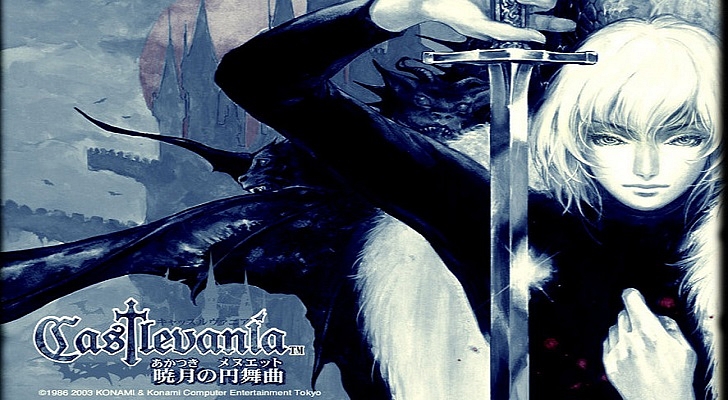
Castlevania: Aria of Sorrow/Castlevania: Akatsuki no Minuet (キャッスルヴァニア ~暁月の円舞曲)


The Castlevania II: Simon's Quest (C2SQ) release on the Nintendo Entertainment System, part of the 1987 onslaught of sequels-that-went-entirely-different-directions, was part of a concerted effort to make games more "epic" in scale. In video games, nothing was more epic than the RPG, offering dozens of hours of playtime, experience points, levels, upgrades, dialog and otherwise all the things that were missing from the 45 minute arcade games that had inspired consoles up to that point. Japanese game designers had long attempted to use the RPG model as a way of breathing more life and playtime into an otherwise short game. A number of improbable games with "RPG Elements" came out as part of this experiment in fusing styles, racing games, sports games, even a pinball game. C2SQ was one of these many, sometimes confused, products that emerged.


Whether C2SQ is a good game or not is up to some debate. The longer view of history has not treated it universally kind. It's plagued by dubious design decisions, weak powerups, loads of grinding, unknowable puzzles and backtracking, instant deaths and other annoyances. But it was a noble attempt, and everybody I knew had a copy of it, and thought it was awesome at the time even if none of us ever finished it. The next 11 Castlevania games were a return to a decidedly non-RPG style of game.

By the mid-90s it was clear that the Castlevania jump-n-whip model had run its course, yet it was still a vibrant and beloved franchise. One of the chief designers of the Castlevania, Koji Igarashi, lamented seeing piles of Castlevania games in the bargain bin at local stores -- the games were popular, but short-lived. Furthermore, consoles had moved on and the 3d revolution was in full-swing, yet Castlevania's signature gameplay mechanics didn't translate well to 3d.

A contemporary of the original Castlevania game on the NES was Metroid. Metroid was a revolutionary game. Using the limited hardware available at the time, Gunpei Yokoi (known for his unique philosophy of "Lateral Thinking of Withered Technology") defined an action-adventure-exploration model for games. Instead of slavishly hammering in bits of commonplace RPGs into other game genres, Metroid eschewed most of these things. The goal was exploration and the reward for exploring was power ups. This was copied in later games like Blaster Master, but the Metroid games continues to stand as a gold-standard for this kind of game.


This model, and the RPG-like C2SQ formed the kernel then for the revitalization of the Castlevania Franchise. In 1997 we saw the release of one of the finest video games of all time, Castlevania:Symphony of the Night (CSOTN) It was a powerful homage to Metroid, yet refined the game style on almost every level. More a 32-bit version of the what the Metroid formula had become with Super Metroid, so good was it that the term "Metroidvania" was coined to capture this particular genre of game. The games played so close to each other that you could almost swap the tilesets of each game and not know it.


Still, despite rave reviews, Konami tried to put out various 3d-style Castlevania games to almost universally limited success. By 2001 it was clear the Castlevania didn't have legs as a 3d game. It was this year that Nintendo was going to release the Game Boy Advance and there was no doubt that a Metroid game was going to follow. Inspired yet again, Konami decided to reach back into their archive of past successes and remembered CSOTN. Deciding to release a Castlevania game as a GBA launch title, Konami pulled out all the stops and released Castlevania: Circle of the Moon, the first Metroidvania style Castlevania in almost 5 years.


It was so successful that it spawned 2 more immediate sequels: Castlevania: Harmony of Dissonance and Castlevania: Aria of Sorrow (CAoS) all on the GBA. Typical of immediate sequels, Harmony of Dissonance was less successful, but Aria of Sorrow nails the formula. 


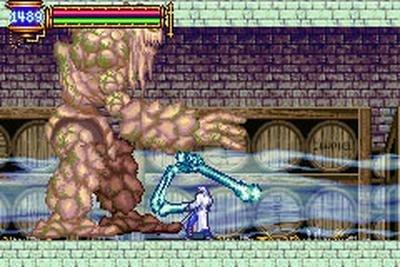
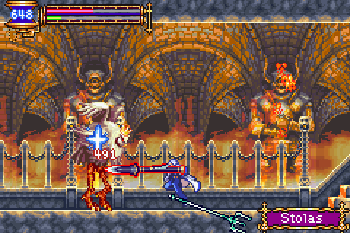
In a typical confused, tedious, badly written and unnecessary Castlevania storyline, you play as Soma Cruz, probably the least plausible teenage character ever created. Soma, who looks more like a middle-aged high society dragon lady, is a potential vessel for Dracula and is granted strange powers over the souls of demons. In other words, if you kill a certain kind of enemy, you might randomly absorb their power for yourself. In practice, this is pretty cool, if not sometimes a bit tedious to get certain souls. There are an astonishing number of souls, some more useful than others, but it give you something to do other than boredom while backtracking endlessly around the castle. It's almost a Pokemon type subgame as you really want to find all of the souls possible.

This mechanic also replaces the traditional Castlevania optional weapon. You can get everything from a spear throwing ability to a giant skeleton arm that follows you around smashing enemies to bits. One of my favorites is a Sith Lord style lightning charge. The combination of souls, and other weapons you pick up throughout the game provide you with nearly endless combinations of attack powers and it's worth playing through the game a few times to see what souls and weapons you'll end up with.


As you continue to power up, you eventually become a virtually unstoppable juggernaut. There are some who complain about this, but I never felt upset about it, it keeps the late game breezy as you flitter around the castle chasing down that one last item, or adding that one last secret room your couldn't get to before to your map.

There's also an unbelievable number of primary weapons, with wildly different properties. It's fun to find them and then try some of the oddball ones out for a while. Some of the weapons look great on paper, but don't work well in certain combat situations, so you'll find yourself learning the feel of each weapon and quickly switching between different ones even during the course of a single fight. This keeps combat brisk and interesting for most of the game.

The game plays really well, controls are tight and a handy backdash move can turn some early-to-mid game fights into mini fencing duels with some of the stronger enemies. Your character evolves and stays expressive throughout the game. There really aren't too many cheap hits, and to be honest the game isn't really all that hard. There are plentiful save points throughout the castle and the automap does a reasonable job of showing where you need to explore next. There's a few maze-like sections that can get tedious to figure out, but they're more than balanced out by the rest of the game.


Graphics are pretty good. They don't suffer from the typical GBA "developed at a higher resolution  then scaled down to the GBA resolution" problem that a great many GBA games have. It's clear that Konami, like Nintendo, developed this game from the get-go to fit within the limitations of the system, and the presentation of nearly everything in the game is fantastic (your main character's funny looking long legged running cycle notwithstanding).

The Castlevania series is legendary for the amazing music. Even on the lowly Black and White original Gameboy, the music was stunning. CAoS's music is lackluster by Castlevania standards, great by normal GBA standards. It's more than competent and rarely intrudes, but it's not memorable in the "catchy" sort of way you'd like. Is it bad? No, definitely not, it's actually quite decent, just not up the kind of standard you'd expect out of the series.


But wait, there's more. The game has different endings and even an entire second quest where you play through the game as a Belmont, whip and all. It's not as fleshed out as the main game, but Julius Belmont plays different enough from Soma that it's worth puttering around the castle for a couple hours to see how to solve different situations. It's fun and keeps the game replayability high, long after you've exhausted the normal quest.

It's obvious that CAoS did something right, while no more Castlevania games graced the GBA, the series kept on strongly, with no less than three similarly styled Metroidvanias coming out on the Nintendo DS through 2008. That makes a total of 7 games of the Metroidvania type across 3 platforms (with some coming out on the WiiU Virtual Console) -- and to be honest it doesn't really matter which ones came out when and on which platform, they're all only moderately different, and to be honest, the Castlevania story doesn't matter at all, any or each will give you hours of enjoyment. They're all just more of the same awesome game style.

Understandably, Konami decided to abandon the Metroidvania formula after all those similar games. At this point, Castlevania is well down the road of becoming a moderately good God of War clone. If we're to see more games of this type, they'll probably not be coming out of Konami.


Wednesday, May 21, 2014

Astro Boy: Omega Factor/Astro Boy: Tetsuwan Atom (アストロボーイ・鉄腕アトム) - Game Boy Advance


Coming of age in wartime Japan, Osamu Tezuka found himself pulled from middle-school and pressed into service at an imperial arsenal. Standing lookout for American bombers in a watch tower, he survived a series of ferocious firebombings of his hometown, Osaka. He eventually went back to school and graduated with an M.D., but the memories of the bombings and his feelings on war and conflict never left him.

He decided not to practice medicine and instead chose to give voice to his feelings through his true love, cartoons. Prolific is too small a word to use to describe his artistic output. With a body of work of more than 150,000 pages in hundreds of volumes he virtually defined the medium of manga in Japan for decades - with luminaries as well known as Hayao Miyazaki referring to Tezuka as a major influence.
Unlike other post-war cartoonists who sought to rectify feelings of loss and victimization at the hands of foreign aggressors, Tezuka often filled his works with themes of post-racial, post-national reconciliation and peace. One of this most globally regarded works is Astro Boy.

Ending print run in the late 60s, Astro Boy of course saw recreation as an anime series in the 1980s. Timed to hit at the same time as a new 2003 series, Astro Boy: The Omega Factor (AB:TOF) is a Game Boy Advance side-scrolling brawler with silky controls and a great sense of style that stays mostly true to the spirit of the original manga that has a few flaws that keep it from greatness.


Made by the legendary Treasure and Hitmaker (Sega AM3), AB:TOF is a bright and breezy game with lots of visual impact that shows off lots of what the GBA could do in the right hands. It features tons of recognizable Astro Boy characters, rendered in loving detail and a surprisingly long and possibly overly ambitious game for a portable experience.

While many reviews compare AB:TOF to the Mega Man series, I think this unnecessarily conflates two cute robot fighters for justice. There's really very little in common between the games. AB:TOF is also often called "action platformer", but there's very little platforming in the game in any traditional sense. Instead you're put in charge of a cute fighting mechanoid who jumps and flies around the screen with ease to punch and kick and laser and machine gun your enemies. Combos flow freely and special moves are wonderfully easy to pull off without any of complex Street Fighter/Tekken finger twisters. It's fun to pound your enemies and send them careening across the screen into each other. That fun factor kept me playing long after I had any reason to. In, fact I ended up playing through the entire game about 4 times I was having such a kick with the fluid controls.


In typical Treasure style, the game is loaded with bosses, sometimes bosses after bosses after bosses. In the context of a brawler this actually works pretty well and really turns the game into a boss rush game with filler levels full of fairly easy look-alike enemies. Not all the bosses are great, but the ones that are good are interesting and screen filling. 

To mix things up there are also shooter levels. Astro Boy flies, Superman style, and fires a laser out of his finger. A variant of the shooter levels, Astro Boy assumes a vertical, slower, position, but can fire in both directions. These are pretty welcome diversions from the brawling and offer some surprising variety to the game. They aren't Gradius, but they're effective for what they do. 

The music is upbeat, catchy and perfectly fits the game. I don't think I would make a big effort to listen to any of it outside of the context of the game, but it's actually kind of hard to think about AB:TOF without the great music. It perfectly complements the on screen action in almost every part of the game. I think the only place the music really suffers is the lousy sound production of the GBA (at least as compared to the SNES's glorious Sony produced SPC700).


So what keeps this game from greatness? In a word, polish. It feels like the developers set a scope far too ambitious for the development resources available -- the game was in serious need of some critical editing. By combining story lines from many of the manga issues they resulted in a huge, virtually unfollowable story involving time travel, international politics, doomsday machines, tragic loss, ancient lost civilizations and more, with far too much dialog for a brawler. It's too much, and it's not tied together. The late game suffers as well as it tries to accommodate this mess.

After the first few overly long bits of talking, you'll find yourself just skipping through them. But of course this is a mistake as clues are embedded in the conversation that helps you solve the time-travel riddle the conclusion of the game hangs off of. You can get pretty far in the game ignoring this nonsense and have a more enjoyable time, even if the trade-off is that you probably won't be able to complete the game, destined to endless loop through time not knowing about the central conceit in the game.

The biggest problem I felt while playing was the feeling of sameness throughout the game, despite all the attempts at variety. I think this stems from the way the game sets up the fights: you'll run a bit, the screen will lock into a small "arena" and a wave of the same enemy will drop down out of the sky. You'll destroy all of the enemies then move on to the next "arena" and fight a slight variation of the enemy you just fought in the previous arena -- a different color, or maybe a different size. And you'll do this for a dozen times in a level, maybe broken up by a couple waves of a different enemy. In most brawlers, you might fight one kind of enemy, then another, then some combination of the two to make it interesting. AB:TOF is almost completely devoid of these combination battles and I think the non-boss portions of the game really suffers for it as non-boss fights start to drag on and on.


Another problem is the surprising amount of slowdown in the game. I can't ever really recall playing a GBA game with slowdown, but there are a number of moments with only 3 or 4 sprites on the screen at once and the frame rate drops terribly. It's weird, especially given Treasure's renown for manic gameplay with screens piled full of enemies. It feels like an optimization issue that would have been solved late in a normal development cycle. It might also be the reason for the lack of combination battles I talk about above.

Finally, the late game suffers from a really pointless time-travel puzzle based on obscure clues referencing one of a few dozen characters you might have met once in the game for a few lines of dialog. It's really not worth figuring out on your own because it'll involve a careful reading of miles of hard to follow dialog. If you want to see the game ending, it's best to just look up the solution someplace and follow it. 

I think if the game had gone through a tight editing round early in development the game wouldn't have overreached so much and a bit more polish could have solved some of the issues in the game. It could have turned this from an okay B game into an A game. There's really lots to love here, so don't let these issues turn you off from the game -- it's a fun game that's totally worth a play through. Just don't get hung up on the story.